

Written 17 September 2026 (AEST). A short, visual follow-up to Monetary Policy Is A Blunt Tool Of The Past (June 2019). Seven years on, the blunt tool just proved the point on itself.
The 2019 claim, in one line
In 2019 I argued monetary policy suffers a recognition-and-response lag — the gap between a problem appearing and policymakers acting — and that a single blunt lever (the interest rate) is the wrong instrument for a complex, networked economy. Near-zero real rates, inverted yields and below-target inflation alongside full employment were the symptoms of a tool that had run out of subtlety.
[ INFOGRAPHIC 1 — THE THESIS THEN vs THE OUTCOME NOW ]
2026: the lever pulled against the wrong force
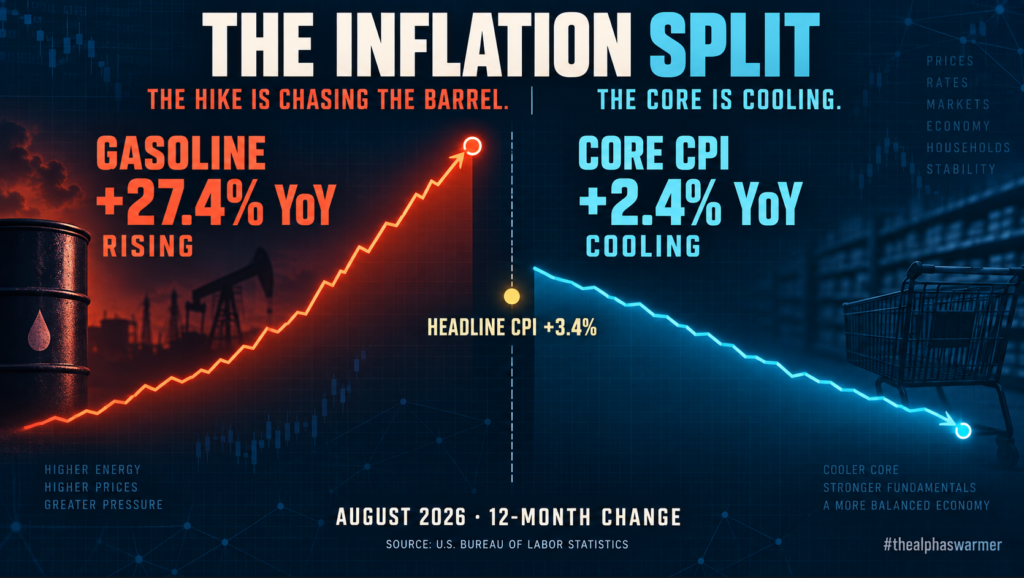
On 16 September 2026 the Federal Reserve raised rates to 3.75–4.00% — its first hike since 2023 — to fight an inflation that is supply-driven, not demand-driven. The evidence is in the split: headline inflation stuck at 3.4% because gasoline rose 27.4% year-on-year, while core inflation actually fell to 2.4%, its lowest since March 2021. A rate hike suppresses demand. It does not produce a barrel of oil. This is the blunt tool, swung at a target it was never shaped to hit.
[ CHART 1 — THE SPLIT SCREEN OF INFLATION ]
The lag didn’t shrink — it went terminal
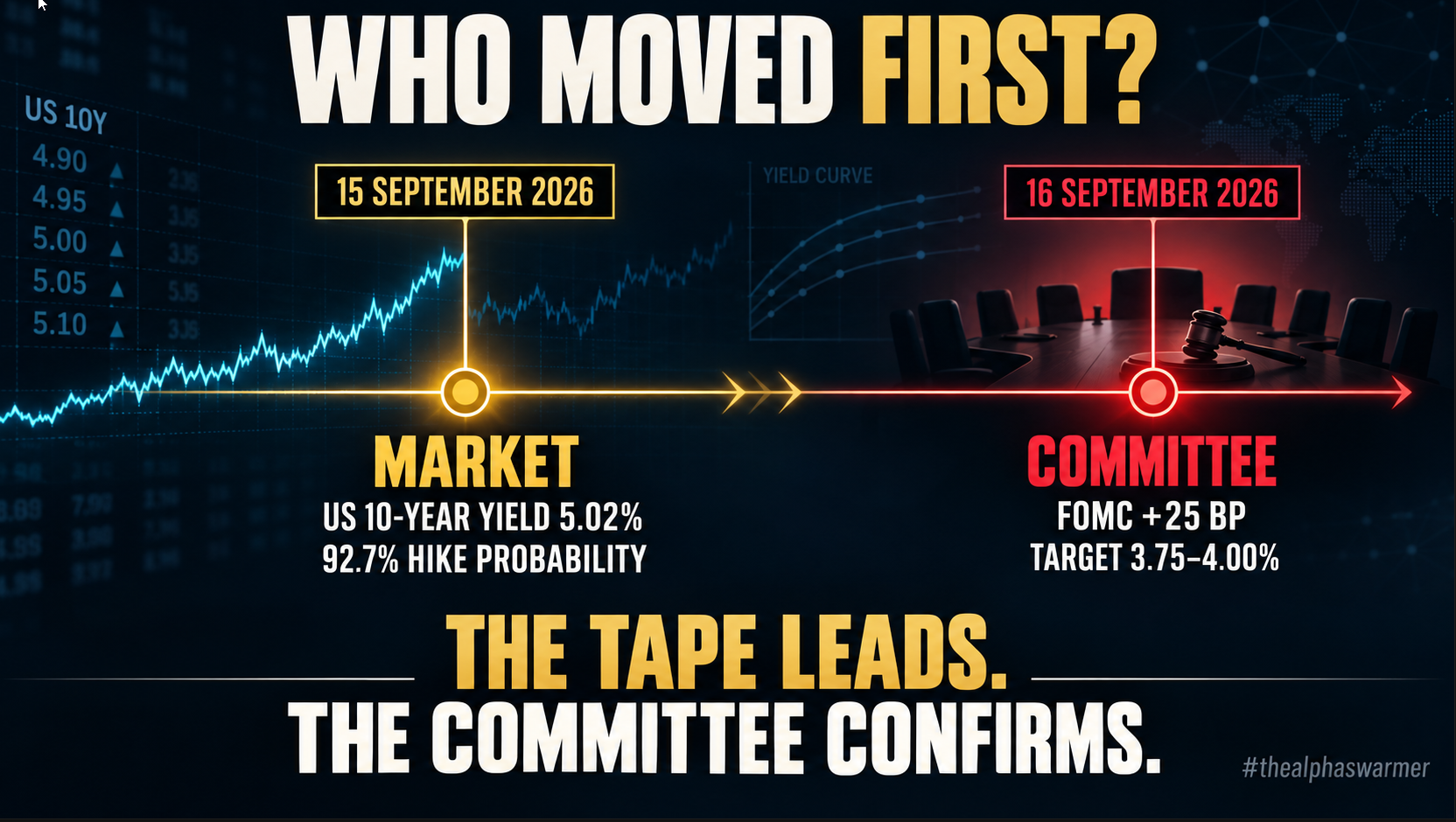
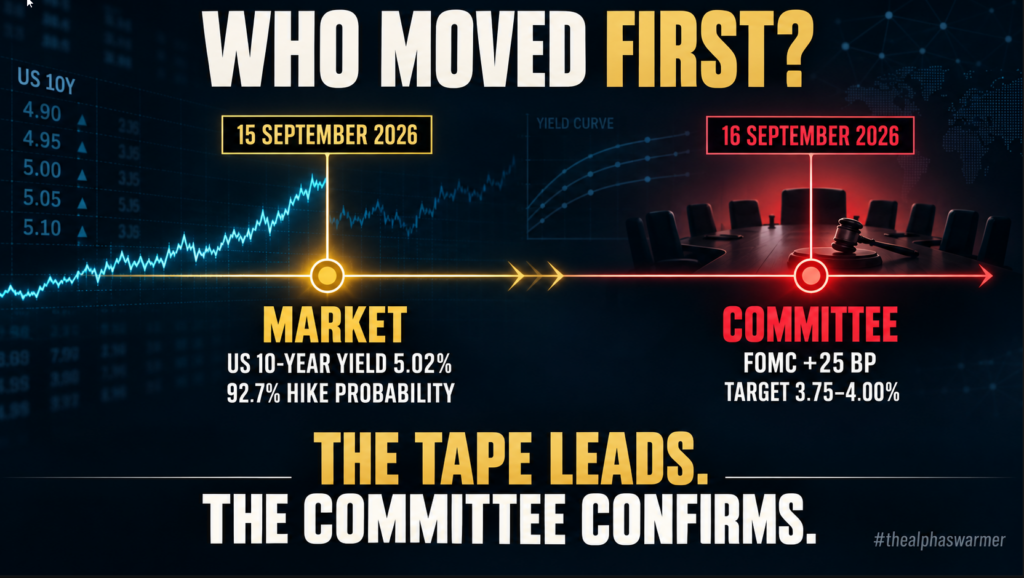
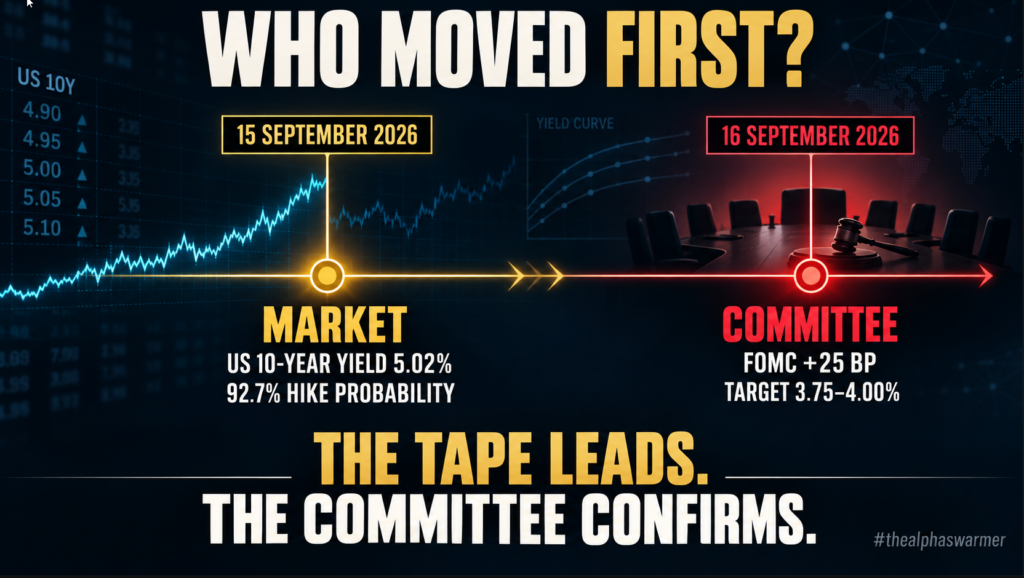
The recognition-and-response lag I flagged in 2019 has not improved with faster data; it has been overtaken entirely. By the time the committee voted, the market had already pushed the 10-year yield to ~5.02% — its highest since 2007 — and priced the hike at ~92%. Policy is now ratifying what capital decided weeks earlier. I have called this the terminal lag of monetary policy.
[ INFOGRAPHIC 2 — WHO MOVED FIRST ]
The 2019 conclusion still stands
The answer I offered in 2019 has not aged — it has sharpened. A networked economy needs instruments matched to its structure: fiscal precision, supply-side capacity, and tools that reach the actual cause rather than one price of money applied to everything at once. A blunt tool used harder is still blunt. 2026 is the proof, not the exception.
Provenance: this sits on my own dated desk notes — commentary on the oil shock and yield pressure and a US-yields audit circulated 8–10 September 2026, before this piece.
Related reading: Monetary Policy Is A Blunt Tool (2019) · The Demise of Monetary Policy · Hike It Double?
References: Federal Reserve (2026) FOMC statement, 16 September. U.S. Bureau of Labor Statistics (2026) Consumer Price Index — August 2026, 11 September — https://www.bls.gov/news.release/cpi.nr0.htm. Trading Economics (2026) US 10-Year Government Bond Yield.
Opinion of #thealphaswarmer. Not financial advice.